Dropshipping Import Tax: Everything You Need to Know

SIB Content Team
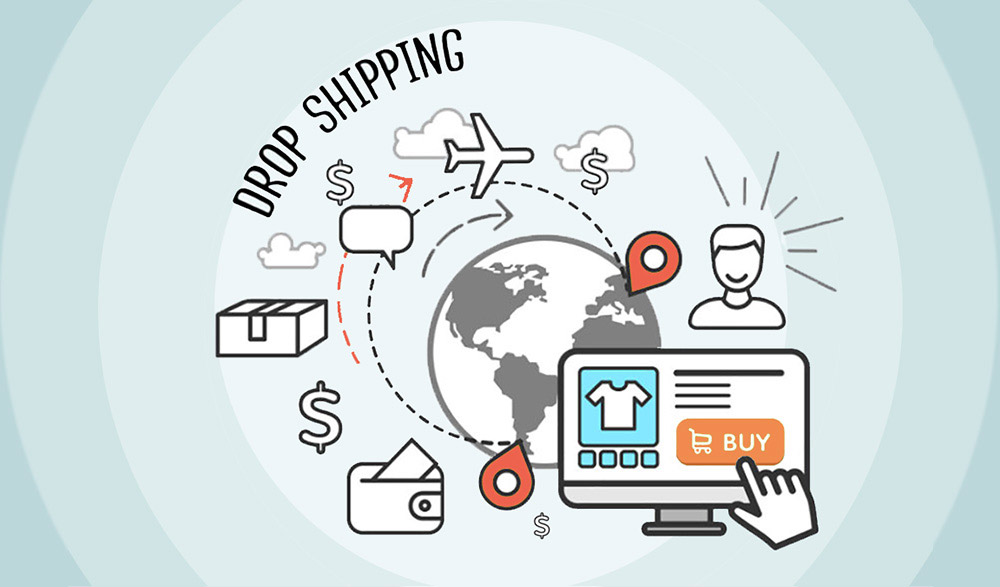
Dropshipping is a business model that allows retailers to sell products online with minimal upfront investment. In this model, products are sourced from third-party dropshipping suppliers who ship orders directly to end customers. While dropshipping is widely known for being easy to start, it can become more complex due to import taxes and customs issues, especially when dropshipping from China or other overseas countries.
So if you are confused about whether you have to pay import taxes when dropshipping from China, then you are in the right place! Let's find out how import taxes and duties work in different countries and what you can do to avoid tax issues and delivery delays when dropshipping.
Do You Have to Pay Import Taxes When Dropshipping from China?
First, you don't have to pay any taxes to China for a dropshipping business. However, since you ship internationally, you or your customers may be required to pay additional customs fees, such as duties and import taxes, to the country where your products are shipped. It depends on the shipping destination, goods value, and the carrier.
The tax value and threshold value for import taxes and duties vary among different countries and regions. To better understand import taxes and duties, it’s essential to focus on the specific customs and tax regulations of your target destination country or region.
US Import Taxes from China
Do I have to pay tariffs for products sourced from China? If you ask me this question before February 2025, I may answer a big "YES". However, since February 4, 2025, the $800 duty-free exemption for China-imported products has been abolished, and an additional 10% tariff has been imposed on China-based imports. Since March 4, 2025, another 10% is added, resulting in a cumulative 20% tariff on Chinese imports.
According to U.S. Customs and Border Protection, most products of China (including products of Hong Kong as explained in the Federal Register Notice regarding China and EO 13936 (July 17, 2020)) are no longer eligible for the administrative exemption from duty and certain tax at 19 U.S.C. § 1321(a)(2)(C) and are subject to the additional ad valorem rates of duty.
When are Import Taxes Required?
As of February 4, 2025, most products imported from China no longer qualify for de minimis entry, meaning they cannot enter the U.S. duty- and tax-free. These goods are now subject to import duties and taxes, including an additional 20% tariffs imposed under new policies. Importers must file a formal or informal entry and pay all applicable duties, taxes, and fees for affected shipments.
Most imports from China now have an extra 20% tariff on top of the existing tax rates. For instance, clothing, which is already subjected to a 35% tax, has now been taxed at 55% total (35% + 20%). That means the tax volume to be paid is (order value + shipping cost) × 55%.
IMPORTANT UPDATE (December 18, 2025):
The US Trade Representative (USTR) has extended tariff exclusions on 178 Chinese products until November 10, 2026. This move follows through on one of the pledges made in the trade agreement reached at the end of October.
The U.S. cut tariffs on China related to fentanyl to 10% from 20%. This reduces the overall rate on Chinese goods to around 47%.
Who Will Pay Import Taxes?
The carrier will usually pay any outstanding duties and taxes to the customs authorities on your behalf. This is to minimize the delivery time of your goods. The end customer will then receive a duty invoice, which must be repaid in full before the goods are delivered.
Therefore, if your customers order in bulk from your store, it is always best to inform them whether the products they purchase are subject to import taxes or not.
Dropshipping VAT in EU Countries
Import taxes in the EU are relatively complex, which makes them a major concern for cross-border e-commerce sellers planning to start an international dropshipping business. The primary taxes involved in importing products into the EU include VAT, import VAT, and customs duties. This can be confusing, as VAT rates and tax thresholds differ across EU countries. Here is a practical breakdown.
What is VAT and Import VAT?
- VAT
The VAT (value-added tax) is a consumption tax levied on the sales of goods and services in Europe. There are several reasons why a business or seller has to register for VAT, such as reaching the VAT registration threshold or storing goods in a country. All EU member states have their own guidelines and VAT rates that apply to different product categories and business fields.
- Import VAT
The Import VAT is levied by the local customs administration within the EU when products are imported from third countries, in addition to customs duties and special consumption taxes.
The dropshipping business model is typically associated with overseas suppliers, especially those based in China, and most dropshipping businesses source their products internationally. As a result, in addition to regular VAT charged on sales to end consumers, import VAT is also payable when goods are brought into the EU.
How Does Import VAT & Duty Work in Dropshipping?
If you are dropshipping from China to EU countries, you must know that, from July 2021, all products imported into the EU are subject to Import VAT in the country where the products arrive. And it applies the normal VAT rates of the importing countries.
In addition to VAT on imports into the EU, country-specific customs duties depend on the country of import. For example, in Germany, the customs duty threshold is still a goods value of €150.
Therefore, when it comes to import VAT, EU dropshipping businesses generally fall into one of the following two situations.
- Import VAT is applied to orders that are equal to or less than 150 EUR.
For imported orders valued equal to or less than €150, you can use the One-Stop Shop for Imports (IOSS) to declare and pay the Import VAT on behalf of your customers. And the products will be exempt from customs duty.
IMPORTANT UPDATE (DECEMBER 18, 2025):
Cheap packages entering the EU will be charged a tax of €3 per item from next July. The deal effectively ends the tax-free status for packages worth less than €150. The €3 duty will be applied to each different item, according to its tariff heading, contained in a consignment. It’s important to note that the tax is calculated per item, rather than per parcel.
For more information, please read “How the EU €3 Customs Duty Affects Cross-Border E-commerce and Dropshipping.”
- Import VAT and customs duties are applied to orders that are more than 150 EUR.
For imported orders valued more than €150, IOSS will no longer be applicable. Your end customer, the direct recipient of the products from non-EU countries, is responsible for import VAT and customs duties.
If your customer orders products valued over €150, a wise choice to avoid extra customs fees is to ship the order in multiple small packages.
Dropshipping Taxes in the UK
UK dropshipping taxes and VAT work similarly to the EU. If you import products from a retailer in a foreign country such as China, you will be charged the following taxes:
- UK VAT
The UK government charges VAT (value-added tax) on the sale of goods and services. You’ll need to register for VAT if your business's turnover exceeds the VAT threshold. It’s charged to consumers in the price of goods, and collected by businesses. In the UK, businesses are then responsible for reporting it to the HMRC (Her Majesty’s Revenue & Customs). The standard VAT rate is 20%, and it applies to most goods and services.
- Import VAT
Similarly to the EU, import VAT applies to the imports of goods from abroad into the UK. It is usually charged at the rate of VAT that would have applied to the goods as if they had been purchased in the UK. HMRC will sometimes allow businesses to reclaim the import VAT they pay on goods imported into the UK.
- Customs Duty
Unlike the EU, the UK has a customs duty threshold of £135. Goods ordered from overseas retailers are exempt from customs duty if their value is £135 or less and they do not contain alcohol or tobacco. For goods valued above £135, customs duties are charged based on the type of product and the country of export.
You can look up commodity codes, duty, and VAT rates at www.gov.uk/trade-tariff.
How to Claim Import VAT Back from HMRC?
VAT-registered businesses can use the postponed VAT accounting (PVA) method to declare and pay import VAT. Under this approach, the payment of import VAT is deferred until the business submits its VAT return, and the VAT may be reclaimed as input tax on the same return.
Alternatively, a business can choose to pay import VAT at the point of importation. The business may then be able to reclaim the import VAT as input tax on its VAT return, subject to the normal rules for reclaiming VAT. HMRC provides more information about accounting for import VAT on its website.
Businesses that are not registered for VAT are unable to reclaim import VAT.
Import Taxes on Dropshipping Brazil
Taxes are complicated and expensive in Brazil, which has been a pressure for most cross-border e-commerce businesses. Due to frequent policy changes and regulatory uncertainty, many dropshipping sellers are concerned about facing higher import taxes. Therefore, it is essential to understand how import taxes and tax exemptions currently work in Brazil.
How Does Import Tax Work in Brazil?
Imports are subject to multiple taxes and fees in Brazil, which are usually paid during the customs clearance process. Three taxes account for the bulk of import costs:
- Import Duty (abbreviated in Portuguese as II)
- Industrialized Product tax (IPI)
- Merchandise and Service Circulation tax (ICMS)
In addition to these taxes, several smaller taxes and fees apply to imports. And most taxes are calculated on a cumulative basis.
For B2C businesses, import taxes are typically set at 60% of the CIF value (the cost of the product plus international shipping). Additionally, ICMS may sometimes be applied to imported goods, depending on the carrier.
Will Shipments of up to US$ 50 be Taxed?
The answer is YES. The Federal Revenue Service released new guidelines for taxation on internationally imported products purchased through cross-border e-commerce. Since August 1, 2024, purchases of up to $50 be taxed at 20%. For products valued between $50.01 and $3,000, the rate will be 60%, with a fixed deduction of $20 on the total tax.
The new tariffs could raise the cost of importing goods, affecting dropshipping businesses that source products internationally. In response, many sourcing agents are taking proactive measures, offering reliable fulfillment services to help dropshippers in Brazil maintain consistent profits despite the changing tax policies.
How to Avoid Import Tax Issues When Dropshipping?
Before starting a dropshipping business, it’s essential to research the import tax laws of the countries where you plan to sell your products. Each country has its own rules and regulations, and understanding them is key to avoiding potential issues. Additionally, selecting a reliable dropshipping supplier and choosing the right shipping method can help you legally minimize extra customs fees on your packages. Here are some practical tips to guide you.
Be Careful to Use Express Shipping Methods
Express shipping services, such as DHL, UPS, FedEx, and TNT, are more likely to be inspected by customs officials than slower methods like standard postal services. This is because express shipments are typically higher in value and prioritized for faster delivery.
To avoid import tax issues with express shipping methods, it is recommended to choose a shipping method that is less likely to be inspected by customs. Alternatively, if you need to use express shipping for faster delivery, make sure to communicate with your customers about potential import taxes and help them understand their responsibilities.
Do Not Ship Multiple Products in Bundles
Import taxes are primarily determined by the value of the goods. Large packages containing multiple items are more likely to be inspected by customs, as their total value may exceed the threshold. Therefore, for dropshipping sellers, if a customer orders multiple products at once, it is recommended to ask your supplier to split the order into several smaller packages to distribute the value across multiple shipments.
Be Transparent with Your Customers
Ensure you are transparent with your customers about any potential import taxes they may be required to pay. This can help avoid any issues with unhappy customers down the line. You can also collect import taxes and duties from your customers at checkout if necessary.
Hire an Accounting or Tax Professional
Hiring an accounting or tax professional can be a good strategy for avoiding import tax issues when dropshipping. An experienced professional can help you navigate the tax laws and regulations in your own country as well as in the countries from which you import goods. They can also help you identify potential issues and take steps to mitigate them.
How Does SourcinBox Work on Dropshipping Import Taxes?
Working with an all-around dropshipping agent is also one of the best ways to avoid tax issues on shipments. SourcinBox, a leading dropshipping agent from China, manages the complete process, from sourcing products to ensuring timely delivery to your customers.
Let's see how SourcinBox can help you with customs clearance and avoid import tax issues of dropshipping.
Reliable Customs Clearance Services
You don’t need to worry about customs clearance, as we will handle it for you regardless of the shipping method you choose. All you need to do is provide us with the following information.
- For Orders Shipping to EU Countries
If you have registered for IOSS, you can add it to SourcinBox for customs clearance for your orders on SourcinBox. If you don't have an IOSS, we will deal with the customs clearance for you, but we will also collect the tax payable from you.
- For Orders Shipping to Brazil
To make sure that we can deliver your orders to Brazil, we'll need you to provide your customer's CPF number to SourcinBox. You can check our tutorial to collect your customer's CPF number at the checkout page of your Shopify store. After that, all the customer order information, including the CPF number, will be synchronized to SourcinBox so that we can use it for customs clearance.
However, it’s important to note that the rate of random customs inspections on packages shipped to Brazil has increased. If a package is selected for inspection, you must inform your customer that the applicable taxes need to be paid before the shipment can be released.
Fewer Customs Issues and Delivery Delays
For most dropshipping orders, the combined value of the products and shipping is usually below the taxation threshold. We also offer multiple affordable yet fast shipping options for different countries, helping to reduce the risk of customs inspections.
You can also split large orders into smaller shipments, distributing the order value across multiple packages to help avoid additional import taxes.
Final Thoughts
Dropshipping can be a profitable business model, but it is important to be aware of the potential for import tax issues. Understanding import tax laws is essential before entering the dropshipping industry for cross-border e-commerce dropshippers. And working with a reliable dropshipping supplier and choosing the right shipping method are the final steps to minimize the impact of import taxes on your bottom line.
You can sign up for SourcinBox now to save more on your dropshipping costs and enjoy more stable and reliable order fulfillment services!
Want to learn more? Read our related blog posts below:
- How can Dropshippers Face the Challenges of Trump's Tariffs?
- What to Expect as Brazil's New Taxation Rules on International Purchases Start?
- How China's 2025 New Tax Regulation Will Affect E-commerce Platforms and Dropshipping
Frequently Asked Questions
1. What are the import tax rates and thresholds for different countries?
| Country / Region | Tax Exemption | Standard Import Duty & VAT | Key Notes |
|---|---|---|---|
| USA | None | 10% reciprocal tariff on Chinese goods | The tariff on Chinese goods was reduced from 20% to 10% on Nov 10, 2025. |
| EU | €150 | Import VAT (varies by country) + Customs Duty | From July 2026, a €3 flat customs duty will apply per item category for a parcel under €150. |
| UK | £135 | 20% VAT + Customs Duty £135 | The UK government announced the abolition of the £135 threshold, targeting full implementation by March 2029. |
| Brazil | None | 20% (Value ≤ $50); 60% (Value > $50) |
/ |
2. Who actually pays the tariffs?
The end customers. The legal importer is technically responsible for the tax. Most successful dropshippers use DDP to pay the tariffs on the customer's behalf to ensure higher satisfaction.


Share Article: