From Fanno's Failure to TikTok Shop's Success: What Can Dropshippers Learn?

SIB Content Team
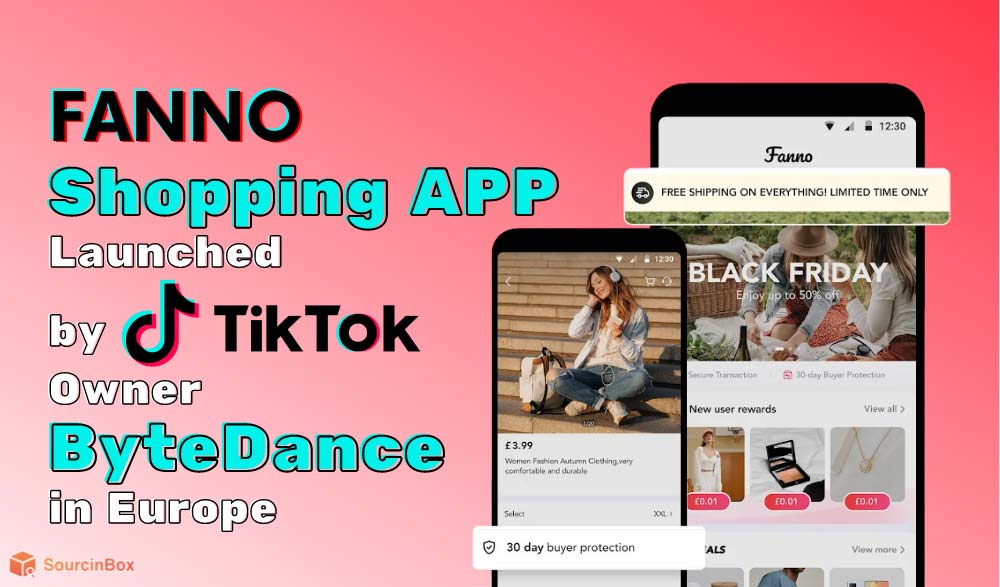
At the end of 2021, ByteDance launched its independent e-commerce app Fanno in five countries, including the UK, France, Italy, Germany, and Spain. However, by 2022, Fanno appeared to fall into operational stagnation and quickly lost momentum.
Fast forward to 2025, and the e-commerce industry is advancing rapidly, with TikTok driving the rise of TikTok Shop. From Fanno’s failure in Europe to TikTok Shop’s success, what valuable lessons can dropshippers learn?
This article delves into the key reasons behind Fanno’s failure in Europe, analyzes the fundamentals driving TikTok Shop’s continued success, and provides a step-by-step guide to launching TikTok dropshipping. Ready to ride the next e-commerce wave? This guide has everything you need.
Why Fanno Failed in Europe
Launched on November 16, 2021, the Fanno App was a major e-commerce platform introduced by ByteDance for global users. Its mission was to deliver a wide range of affordable, high-value products to shoppers worldwide.

In its early days, Fanno quickly gained traction in the European market thanks to its aggressive pricing strategy. Many trending products came with 40%–60% discounts. The majority of items were priced between €1 and €16.
However, operational risks and product-related issues soon began to surface. By the end of May 2022, multiple reports suggested that ByteDance was planning to shut down its standalone e-commerce platform Fanno, with news that the Fanno project team had already been disbanded in April.
In response, a spokesperson for Fanno clarified that the platform would remain operational and continue to support both users and merchants.
By June 2023, visiting the Fanno official website revealed a clear message to users: “We are sorry to inform you that Fanno has officially ceased operations as of June 10, 2023.” At the same time, the Fanno team assured consumers that if they had any questions or concerns about their past orders, they could still contact customer support via email for assistance.

Source: Fanno
Currently, the Fanno app can still be downloaded for free on Google Play and the Apple App Store, but its latest update dates back to April 2022.

Source: App Store
Today, the official Fanno website is no longer accessible through search engines, and even the listed support email now returns an error message saying that the domain cannot be found. All these signs directly confirm that Fanno was permanently shut down in 2023.

Source: Google Email
Why did Fanno fail in Europe despite its price advantage?
Poor Product Quality
Due to the lack of a unified quality control standard, Fanno’s product quality varied widely, leading to a flood of negative customer reviews. Apparel items often sparked dissatisfaction due to inconsistent fabrics compared to product descriptions, size standards, and size deviations.
The poor product quality led to a surge in return rates. On review platforms such as Trustpilot and the App Store, negative feedback about Fanno quickly piled up. Many customers complained that the items they received were “completely different from the product descriptions”.
Most importantly, Fanno consistently failed to respond promptly to customer feedback. The platform neither followed up on problematic products nor offered any compensation to affected users. This neglect of user concerns not only made it difficult to resolve disputes but also steadily eroded the platform’s credibility.

Source: Trustpliot
Delayed Shipping & Fulfillment
Fanno promised free shipping on all products, along with fast and reliable delivery services.
However, reality fell far short of these promises. On Trustpilot and the App Store, many customers complained about shipping issues. Some reported waiting several weeks to receive their orders, with delivery times often stretching three to five weeks. Others even experienced lost packages, yet received no proper resolution from the platform.
What was once advertised as “fast and reliable” had become “slow and inefficient”. The collapse of the delivery experience turned the platform’s promises into empty words.

Source: Trustpliot
Ineffective Operational Strategy
Fanno focused on the European market, targeting five key countries: the UK, France, Germany, Italy, and Spain. These countries are not only prime territories for cross-border e-commerce but also core markets for giants like Amazon and AliExpress, making the competition exceptionally fierce.
Fanno relied on high platform subsidies as a core strategy to attract sellers, aiming to capture market share with low prices and cultivate consumers’ shopping habits.
However, a business model that relies on short-term platform subsidies is inherently fragile. Once the subsidies were reduced, some sellers—facing shrinking profit margins—began refusing to honor discounts or canceling orders without notice, harming user rights.
This created a vicious cycle of “seller misconduct following subsidy withdrawal”. The platform’s trust crisis is getting worse.
Geopolitical Factors
Geopolitical factors also added challenges to Fanno’s European operations. Since February 2022, the Russia-Ukraine conflict has caused energy price fluctuations and supply chain disruptions, directly driving up costs across multiple European countries.
Consumer purchasing power remained under pressure, with a significant decline in willingness to shop online and disposable budgets. Changes in the macro environment have made it even more difficult for Fanno, which relied heavily on a low-price strategy, to stimulate market demand.
As a result, Fanno’s order quantities plummeted. From the continued decline in app downloads to the sharp drop in platform transactions, all data pointed to a clear outcome: with its commercial value steadily eroding, ByteDance would ultimately abandon Fanno.
Why TikTok Shop is Booming in the US
Since entering the US market in 2017, TikTok has experienced rapid growth, legal challenges, and policy fluctuations, yet it remains one of the world’s most popular short video platforms.
Have you ever wondered how a platform built on 15-second videos managed to attract over 1.1 billion global users in just a few years? Why is TikTok so successful?
Strong User Base
TikTok’s global user base continues to expand. TikTok now boasts 1.5 billion monthly active users worldwide. In the United States, 170 million people use TikTok. Out of the 5.4 billion internet users globally, roughly one in five are active on TikTok each month.
■ Gen Z Favors TikTok
TikTok’s user profile shows distinctive youthful characteristics. TikTok data shows that 82% of Gen Z are active users on the platform.
Nearly half of all users are between the ages of 18 and 24. And the number of users in this age group has surpassed that of Instagram. Users aged 13 to 24 account for 69% of the total, and those aged 25 to 34 make up 16%.
Gen Z and TikTok are closely connected. TikTok’s emphasis on personalization, authenticity, and entertainment appeals to Gen Z’s preferences, not only immersing them in enjoyment but also sparking a strong desire to create. Countless young users pick up their phones to record their daily lives, becoming the main driving force in content production.
TikTok has become an iconic social media platform for Gen Z, serving as a birthplace for trends and even a voice for social events.
Seamless Integration & Shopping Experience
Beyond its massive user base, TikTok’s unique integrated shopping experience is a key driver of its growth. Users can complete the entire process—from discovering products to placing orders and managing orders—without ever leaving the app, providing a seamless and convenient shopping journey.
TikTok is redefining the social commerce landscape. This seamless design not only creates more engaging shopping scenarios but also lowers the barriers to purchase, boosting overall user engagement.
■ In-app Shopping: Smooth Shopping Experience
TikTok’s in-app shopping feature breaks down the traditional barriers of cross-platform purchases. Users can complete the entire purchase process within the app, without having to jump to external websites or third-party platforms.
TikTok’s shopping feature effectively drives purchase conversions. Unlike Instagram and Facebook, which rely on external links and product tags that often disrupt users’ browsing and shopping processes, TikTok embeds shopping directly into its content experience.
For example, when users come across a trending home organization product, they can simply click a link to purchase it within the app.
■ Live Shopping: Higher Conversion Rates
TikTok Shop’s live streaming feature provides brands with a bridge between real-time interaction and product showcase. Brands can show new product details, illustrate promotions, respond to audience questions, and even adjust presentation focus based on feedback, gradually enhancing brand recognition.
Compared with traditional e-commerce, live shopping on TikTok can have conversion rates up to 10 times higher. Last summer, the founder of the cosmetics brand Canvas Beauty achieved sales exceeding $1 million in a single livestream, becoming the first person on TikTok to hit this milestone.
TikTok Shop topped the list in consumer engagement. According to a survey of nearly 1,000 U.S. adults, TikTok Live dominates the live shopping space, becoming the platform with the highest consumer participation. In 2024, 76% of consumers reported making purchases through TikTok Live.
AI-Driven Personalization
AI is the hidden engine behind TikTok’s growth. AI has driven the intelligent integration of content and e-commerce, creating an unprecedented consumer experience.
■ AI-powered Recommendation: Understanding Your Preferences
TikTok’s artificial intelligence focuses on the user rather than the technology itself. With advanced algorithm models, AI can accurately capture browsing preferences, interaction habits, and even hidden needs. By analyzing user behavior, TikTok’s AI refines the content it delivers to you.
For example, if a user shows interest in a specific product, TikTok’s AI will recommend more related content, enhancing the overall shopping experience.
In addition, TikTok has introduced an AI-powered “Smart Keyword Filter” that allows users to block content they don’t want to see in their recommendations. This feature has helped users filter over 200 million keywords worldwide.
Whether it’s accurately recommending content that users are interested in or allowing them to filter out what they don’t want to see, TikTok’s core logic has always been to enhance personalized user experiences. This ensures that every user can find their own comfort zone on TikTok.
It is these three core advantages that have enabled TikTok to conquer the global market rapidly. What insights can dropshippers learn? Let’s dive in and explore how you can apply these strategies to grow your own dropshipping business!
3 Key Lessons Dropshippers Can Learn from Fanno & TikTok Shop
Also developed by ByteDance, Fanno failed in Europe, while TikTok Shop continues to expand globally. This stark contrast provides highly valuable market insights for dropshippers.
To stand out in today’s competitive e-commerce landscape, it is essential to grasp the following three key lessons.
Focus On High-Quality Products
For dropshippers, product quality is crucial for repeat purchase rates and return rates. Many dropshippers choose low-priced, low-quality products for short-term sales, which often lead to numerous returns and negative reviews. This not only increases logistics and after-sales costs but also drives away customers and damages brand reputation.
The key to long-term business is to select reliable suppliers. By testing samples and verifying supplier credentials, dropshippers can control product quality. Consistently delivering high-quality products helps you build a strong reputation, retain customers, and achieve steady growth in a competitive market.
Enhance Customer Shopping Experience
Users’ expectations for shopping have long gone beyond the product itself, but cover the entire process experience of “ordering - payment - logistics - after-sales”. The smoothness of each link directly affects the user’s final purchase decisions and overall satisfaction. So, how to improve e-commerce customer experience?
Dropshippers should focus on optimizing the after-sales process. On the one hand, it’s essential to respond promptly to customer inquiries. On the other hand, having clear and transparent return and refund policies helps reduce customers’ hesitation, ultimately improving conversion and retention rates.
Store pages should be designed for simplicity, avoiding redundant information. Meanwhile, dropshippers should streamline the ordering and payment process, allowing customers to complete purchases quickly and reducing cart abandonment rates.
By combining a seamless shopping experience with reliable after-sales support, dropshippers can gradually build user trust. Over time, this can form a distinctive brand impression, laying the foundation for long-term repurchase.
Leverage Platform Traffic for Growth
In social commerce ecosystems like TikTok, traffic is the core engine driving dropshippers’ business growth. To overcome traffic bottlenecks, it is essential to leverage platform rules and resources. Utilize key platform features effectively.
For example, use vivid short videos to showcase product usage scenarios and key highlights, interact with users in real time through livestreaming, and address purchase concerns. Combined with platform advertising tools, precisely target your audience and effectively increase product exposure and conversions.
Dropshippers should also constantly test different marketing strategies to find the growth path that best suits their products and convert platform traffic into orders and profits.
How to Start a TikTok Dropshipping Business
With the rapid rise of TikTok Shop in the global e-commerce market, more and more dropshippers are turning their attention to the opportunities of TikTok dropshipping. Someone may ask, Can I dropship on TikTok shop? Below, we outline the essential steps for launching a TikTok dropshipping business.
Research & Product Selection
Firstly, market research should be conducted to analyze popular trends, best-selling categories, and the preferences of TikTok Shop buyers within the platform, laying the foundation for informed product selection.
Secondly, competitive analysis should be conducted to gain a deep understanding of the core selling points, price ranges, and user reviews of similar products, thereby identifying opportunities for differentiation and avoiding homogenous competition.
When choosing products, follow four key criteria:
▪ Easy to showcase – visually appealing items that can be demonstrated clearly in short videos or live streams.
▪ Reliable quality – products that minimize returns and negative reviews.
▪ Healthy profit margins – ensuring your business remains sustainable.
▪ Content-friendly – items that naturally fit into TikTok’s short-form video and livestreaming ecosystem.
Apply for TikTok Shop
After finalizing your product selection, the next step is to apply for a TikTok Shop account. Begin by verifying that your TikTok account meets the platform’s requirements.
Then, prepare the required documents—such as business licenses, identification, and bank account information—in line with TikTok’s guidelines. Ensuring that all details are accurate and complete.
If you already run a Shopify store, you can make use of link-in-bio tools like Taplink or Linktree to showcase your store link directly in your TikTok profile bio.
Users can quickly jump to your store by simply clicking the link in your TikTok profile bio. This can shorten the path from content attraction to store visit, reduce user churn rate, and make it far more efficient to convert TikTok traffic into a Shopify store.
Find Reliable Suppliers
Finding the best dropshipping suppliers for a TikTok shop is a crucial step in TikTok dropshipping. Look for partners with a solid reputation, reliable delivery, and high-quality products. Dropshippers should clarify pricing, delivery schedules, and return and exchange policies with dropshipping agents.
Building long-term partnerships with trusted suppliers—such as SourcinBox—can help reduce supply chain risks and ensure more stable operations.
Market Your Products
Product promotion is the driving force behind TikTok dropshipping sales. Dropshippers can create attractive short videos or conduct live streams to showcase product features and capture audience interest.
In addition, you can make good use of TikTok’s advertising tools and recommendation algorithm to drive targeted traffic. You can also strengthen word-of-mouth communication by interacting with fans, encouraging comments and sharing, and guiding user-generated content (UGC).
Regularly monitor key metrics such as views, click-through rates, and conversion rates. Optimize content and promotion strategies based on feedback to improve conversion results.
Start Dropshipping with SourcinBox
If you’re struggling with product selection, finding reliable suppliers, or managing an unstable supply chain in TikTok dropshipping, consider partnering with SourcinBox to start your business efficiently.
As a dedicated dropshipping agent for cross-border e-commerce, SourcinBox offers a wide range of market-validated, trending products across multiple categories—such as home goods and beauty—all optimized for short videos and live streams.
What’s more, Sourcinbox ensures product quality and reliable shipping. SourcinBox supports real-time shipment tracking, helping to streamline supply chain management.
Join hands with SourcinBox now to quickly open up the entire chain of “product selection-supply-fulfillment” and easily start your TikTok dropshipping journey!
FAQs
► Is TikTok getting banned on September 17th?
As of August 2025, TikTok’s future in the U.S. remains under regulatory uncertainty. The law mandates ByteDance to divest TikTok’s U.S. operations or face a ban. Yet, President Trump has extended this deadline multiple times—with the most recent extension pushing it to September 17, 2025.
Adding a positive sign for the platform, the White House recently launched an official TikTok account—a move widely viewed as a signal that TikTok is unlikely to be banned anytime soon.
Share Article: